

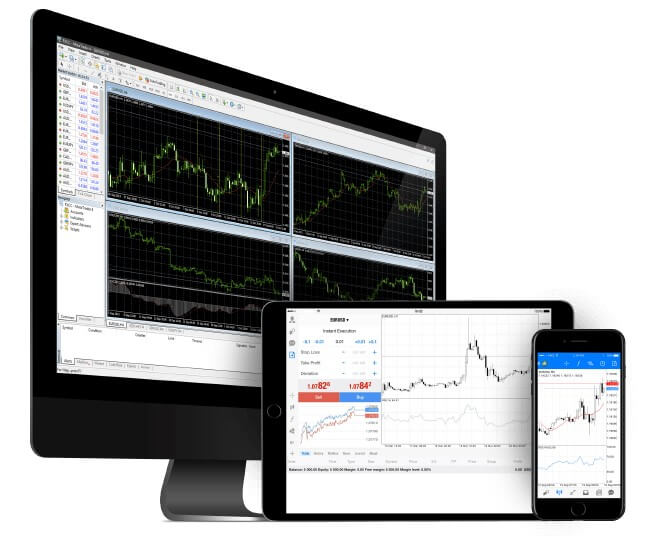
Understanding Minimal Latency as a Feature of Top Trading Platforms
An outstanding feature of top trading platforms is minimal latency; it is described as the ability to accomplish order execution fast. Usually, once relevant data are set into the software programs and the trading venues are specified, the order execution is done in the blink of an eye. In the world of foreign exchange, it is appreciated.
What Is Minimal Latency?
In the forex market, minimal latency refers to order execution in relation to the market reaction. It works alongside the concept that the swiftness of a trading platform is important – especially for scalpers, arbitrageurs, guerilla traders, and other high-frequency traders. As a feature of quantitative trading, one of the main reasons behind it is to raise trading profitability.
Moreover, the subject of minimal latency addresses the issue that there are various factors that can influence a trading platform’s speed of order execution. There are critics who question the quality of a platform since it doesn’t match another’s swiftness; in comparison to other platforms, a difference in execution time is noticeable. It is not, however, simply due to a trading platform’s design; usually, the delay is attributable to a trader’s approach.
Some of the influential factors (to a trading platform’s latency):
- Complexity of trading strategy
- Distance between trading venue 1 and trading venue 2
- Distance between the trading system and the exchange
- Efficiency of trading strategy
Latency Measurement
Since it is the time interval between order execution and market reaction, the measurement for latency is essential; clock accuracy is important. Usually, latency is measured with regard to throughput (or the amount of data that is processed per time unit). Especially in the case of a trader who is searching the market for high-quality tools, knowing the latency measurement privileges him to determine the right trading platform for him.
Exploring a Platform’s Minimal Latency Procedures
A trading platform can remain functional due to a set of procedures. For a trader who aims to pursue the best solutions (with regard to a program’s latency), one of the most effective means is to review the procedures of a trading platform. In most cases, the objective of algorithmic trading revolves around the competitive aspect of a trade.
The typical order process:
- Intended order is set in a trading platform.
- Data is relayed to decision-making programs.
- Order is sent to the preferred trading venue.
- The preferred trading venue attends to order execution.
- A trading platform receives the confirmation of order execution.
CFDs are complex instruments and carry a high risk of rapid losses due to margin trading. Consider whether you understand how CFDs work and whether you can afford the risk of losing your money. This article is for educational purposes and is not investment advice.
Author: Andrew Trent
Andrew holds a degree in Data and Statistical Analysis and brings a tech nerd's curiosity to his writing. Off the clock, he's modeling data scenarios for fun, scuba diving, or taking underwater photos. He lives with his two Labradors, Homer and Duff, and his cat, Fibonacci.
Reviewed by: Chris Blakely
Content Editor with over two decades in financial journalism and a degree in Computer Engineering from the Polytechnic of the South Bank. Chris checks every article for factual accuracy and verifies claims before publication.
Last updated: June 21, 2021
Related Reading


Trader Sentiment
Share your outlook and see the results.
Bullish or bearish on EURUSD today?
Bullish or bearish on Bitcoin today?
Trending topics
FOREX HEATMAP
