

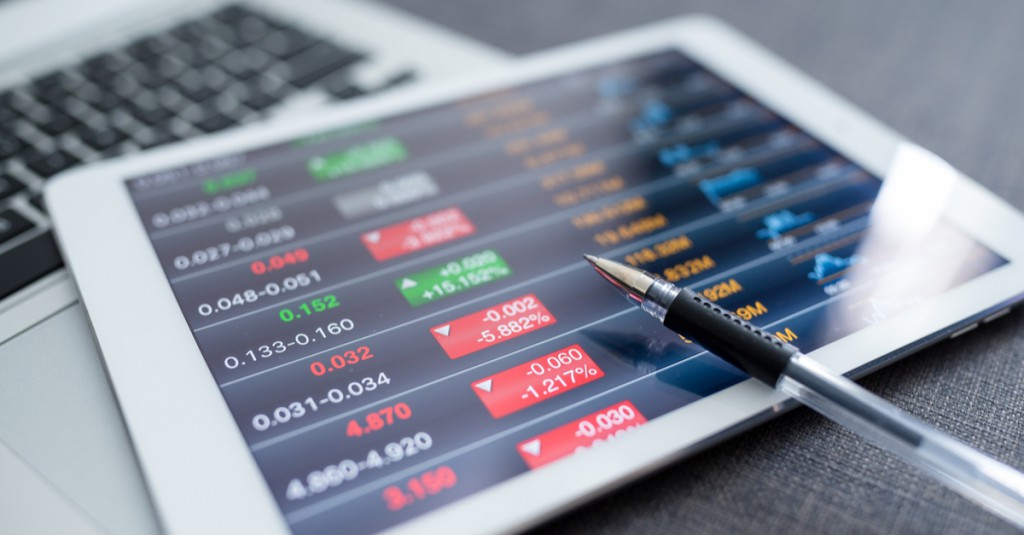
Trading Forex successfully, what works and what doesn’t. Part one; technical indicators
Depending on where you are on the learning scale, you’ll have a different view of the various trials and tribulations you’ve experienced (and at times endured) during your FX learning pathway. If you’re close to the start of your journey, having recently discovered FX trading as a potential investment opportunity, or you’re a part time trader, hoping to eventually leave your full time job and concentrate on trading as a full time career, then you may become extremely excited at the opportunity that technical analysis represents.
If you’re a more experienced trader, who’s perhaps been trading for a decade or more, then you may look back upon your various indicator based trading methods and experimentation using them, with nostalgia. You may have experimented with just about every combination, to ultimately reach the conclusion that; whilst trading with indicators can’t necessarily be classed as wrong, technical indicators have limits. They all lag, none lead, arguably only price leads, which in turn (as an indicator) is arguably the best indicator we can possibly discover.
That’s not to suggest that technical indicators don’t work, many do, many traders cite the “what gets you in gets you out” phrase, to explain their process. When adopting this phrase to apply to your trading, you are indirectly (by accident or design) applying one of the most crucial aspects to your trading; a form of stops, thereby limiting your risk. If you obey your indicator trading method exactly then when you receive the signal to enter you will enter, when you receive the signal to exit you will exit. Therefore, if you manage your risk, especially in relation to the use of position size calculations, you’re addressing this most critical and essential factor of your trading and crucially maintaining discipline.
Experienced and successful traders may still use forms of technical analysis, in fact we all do, at whatever level. Some may use daily pivot points and moving averages and perhaps look for the longer term pivot points, measured on weekly charts. Some will note the key round numbers (handles) on a chart, that price may be approaching and others may only look towards using price action, perhaps illustrated best by standard candlestick, or the Heikin Ashi version of candlesticks.
It’s essential that novice and intermediate level traders understand how technical analysis was developed, who created the various indicators and whilst they were actively developing the mathematical theories, what the creators saw the ultimate purpose for the indicators. Just as candlestick formations were not originally developed for trading; they were developed by Japanese merchants looking for a method to count the supply and demand for basic commodities such as rice, our modern day use of many (or all) of the technical indicators, which nearly all predate the internet, often bear nothing in relation to their original creation.
Most indicators were developed to invest (as opposed to trade) in the markets and as such they were unanimously created to trade off daily, or more likely weekly and monthly charts. Now certain technical chartists would argue that the mathematical purity and consistency of the indicators are maintained irrespective of the time frame, others would suggest that their use is comprised to such an extent that they’re rendered useless, once used to determine potential future price action on the lower time frames.



In conclusion technical indicators do work, particularly if they’re uncorrupted and left on their standard settings. However, proof may exist that technical indicator based strategies work best on longer term methods for swing and or position traders. One of the major benefits when using a combination of technical indicators is that their alignment provides the perfect signal to enter and to exit. As such our discipline should be heightened and our risk is more easily controlled, if we develop the rock hard mental constitution not to tamper with our trading strategy. Technical based strategies can also provide the perfect templates for back testing and indeed forward testing in demo, encouraging us to underpin any experimentation with a highly professional approach.
Continue reading Part Two of Trading Forex successfully, what works and what doesn’t
CFDs are complex instruments and carry a high risk of rapid losses due to margin trading. Consider whether you understand how CFDs work and whether you can afford the risk of losing your money. This article is for educational purposes and is not investment advice.
Author: Andrew Trent
Andrew holds a degree in Data and Statistical Analysis and brings a tech nerd's curiosity to his writing. Off the clock, he's modeling data scenarios for fun, scuba diving, or taking underwater photos. He lives with his two Labradors, Homer and Duff, and his cat, Fibonacci.
Reviewed by: Chris Blakely
Content Editor with over two decades in financial journalism and a degree in Computer Engineering from the Polytechnic of the South Bank. Chris checks every article for factual accuracy and verifies claims before publication.
Last updated: December 27, 2017
Related Reading

Trader Sentiment
Share your outlook and see the results.
Bullish or bearish on EURUSD today?
Bullish or bearish on Bitcoin today?
Trending topics
FOREX HEATMAP
