

Principles of Forex Margin Trading: The Complete Guide

Have you ever come across the term “forex margin trading”?
Before getting acquainted with the principles of forex margin trading, we want to start in order and analyze all the components of this term.
So, let’s start with the margin.
What is the margin?
This is the difference that exists between the selling price and the buying price. To make it clear, let’s take an example. Suppose the selling price of one product is $100, and the direct cost is $60. In this example, the forex margin is $40.
What is lending?
As for lending, you have an idea about this word. A loan is a kind of “borrowing” a certain amount of money. A loan is beneficial for those who provide it (brokers).
We are gradually approaching to our topic. So, based on the above, you can try to define this term yourself. Will you try?
Ok, let’s mention it anyway.
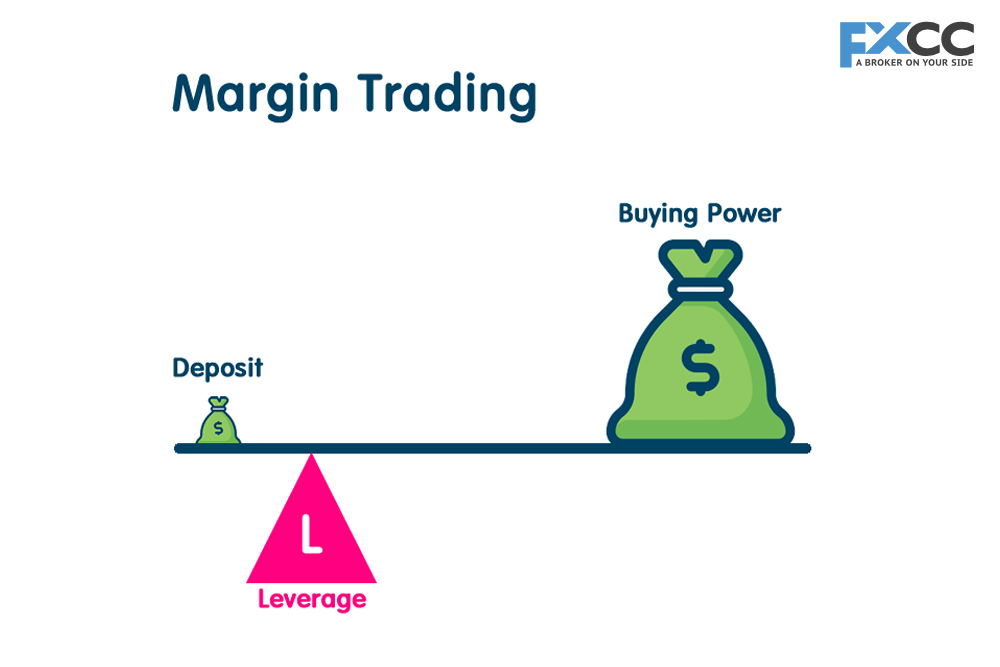
Forex Margin Trading is a transaction using a loan. In the forex market, credit is called marginal leverage. Margin leverage is a loan without interest. The deposit is the client’s money.
With the help of such leverage, traders increase their amount from ten to a thousand times. And this is the main plus of margin trading: to get a good profit from insignificant deposits.
How does margin trading work?
So, the first thing the trader does is put money into the broker’s account. Its size is valid from one to a thousand. Such an indicator is written as 1: 1000.
The second number is an indicator of the selected leverage. As soon as you perform a particular operation in the forex, the deposit will always increase with the amount of leverage.
Example: Your deposit is $100, and your leverage is $10,000. Based on this, one hundred thousand dollars are available to you.
It is important to understand that the trader has the right to dispose of only his deposit, but the loan you received serves to make large transactions in trading.
The principle of margin lending
You must understand that the result will be pleasant when you use so-called financial leverage. This principle is very popular all over the world since it creates all the conditions for traders to make money even on weak market fluctuations and with a small deposit.
In the case of strong fluctuations, traders increase their income several times. Traders receive income from the price difference.
Bottom Line
The first thing to always remember is that when you increase margin funds, you also increase your risks. For this reason, leverage that is more than 1: 100 is recommended for intraday trading and on short time frames.
If you have significant leverage, then positions should be opened in small lots. As soon as there are signs of a trend reversal, then close all unprofitable positions. It is advisable to trade with leverage of 1:30. So you will open fewer transactions or several transactions with a smaller volume and will always control your risk.
New to Forex trading? Don’t miss these beginner guides from FXCC.
– Learn Forex Trading step by step
– How to read Forex charts
– What is spread in Forex Trading?
– What is a Pip in Forex?
– Low Spread Forex Broker
– What is Forex Leverage
– Forex Deposit Methods
CFDs are complex instruments and carry a high risk of rapid losses due to margin trading. Consider whether you understand how CFDs work and whether you can afford the risk of losing your money. This article is for educational purposes and is not investment advice.
Author: Andrew Trent
Andrew holds a degree in Data and Statistical Analysis and brings a tech nerd's curiosity to his writing. Off the clock, he's modeling data scenarios for fun, scuba diving, or taking underwater photos. He lives with his two Labradors, Homer and Duff, and his cat, Fibonacci.
Reviewed by: Chris Blakely
Content Editor with over two decades in financial journalism and a degree in Computer Engineering from the Polytechnic of the South Bank. Chris checks every article for factual accuracy and verifies claims before publication.
Last updated: June 30, 2020
Related Reading

Trader Sentiment
Share your outlook and see the results.
Bullish or bearish on EURUSD today?
Bullish or bearish on Bitcoin today?
Trending topics
FOREX HEATMAP
