

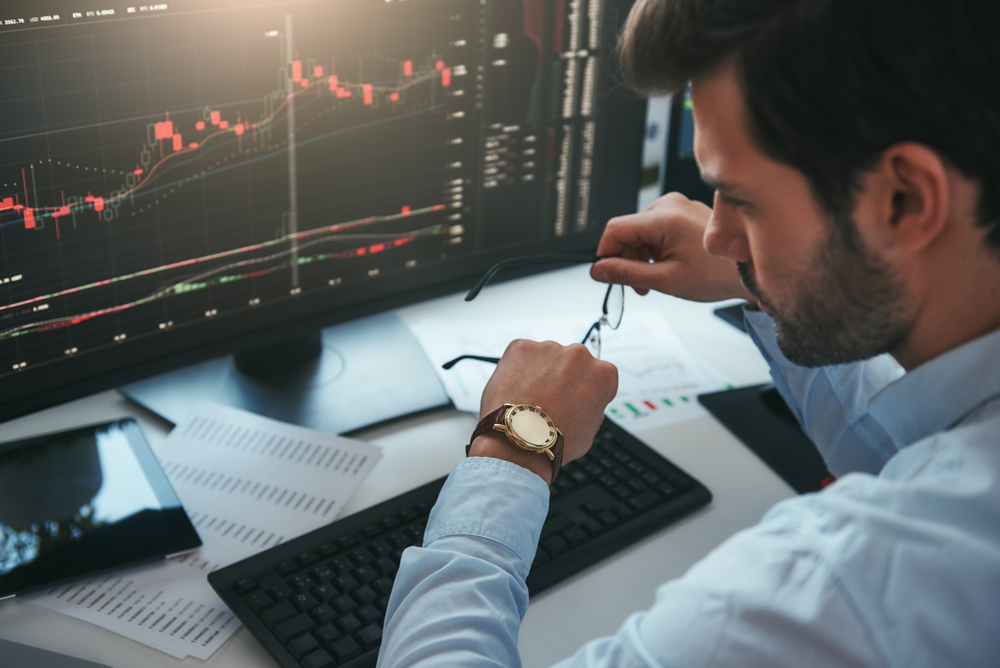
Forex Trade Closing Tricks
Whether you enter or exit a position in the Forex market depends on the market dynamics and the trade timing. When you exit a trade too early, you may miss out on price increases. However, if you hold on to a position for too long, your profit margin may be significantly eroded. A Forex exit trick can help you identify the best exit opportunities to maximize your profits.

Risk Analysis in Forex
If you are considering closing out a position, let’s consider each trade you make as an investment. A “trick” of risk analysis is used in investment evaluation that you might find really useful in your trading. In the market, you invest a certain amount of money – your risk capital – in the hopes that after a certain period, the market will behave in your favor, and you will have the opportunity to close the trade with a certain return on investment. Market investing is precisely what it sounds like.
The Exit Is Where You Make Money.
When you decide to enter a market using your strategy, include your exit strategy when doing good trade practice. What should you do if all goes well and the market changes in ways you don’t expect? What should you do if the market changes in unexpected ways? In a robotic approach, traders set their take profit and stop loss limits; whatever happens in the market, the trade will hit one of those limits.
Even though there are arguments for this position, the purpose of this article is for those who reevaluate their positions once they are in the market – either to limit their inevitable losses, or to gain a more significant profit from a successful trade.

The Sunken Loss Fallacy
It’s a common belief that people fear losing money they’ve invested in the market. That makes sense – after all, you want your money back and some profit, too! However, you can better understand the market conditions right now if you think of that money as already gone.
For example, if you bought a pair, but the market goes in the wrong direction, you’re down 20 pip. If the market goes back up, you are more likely to hold onto your trade than risk a similar amount in a new trade to get those 20 pips back. When making a rational decision regarding where the market will go in the second half of the trade, thinking about the first half of the trade can get in the way.
You can help get around this by analyzing the situation as if those 20 pips are already gone. Your focus should be on where the market is heading – the market has already moved on.
Keep The Profit Coming.
Despite this, there is a positive side to this. For example, suppose the market is up, and you are wondering whether to wait until it hits the take-profit level or keeps running to make more money. In that case, you should close your trade immediately to ensure the profits you have accumulated. Therefore, more cautious traders are likelier to close the trade immediately – they don’t want to risk their investment.
The market doesn’t care how much you are up or down on a trade; it doesn’t impact where it’s going. The riskier traders might keep it open. Reasonable traders might look at accumulated profit the same way they look at accumulated loss.
Bottom Line
As a result, you shouldn’t consider that when deciding whether to keep your trade open (but remember to adjust your stop loss to lock in profit). The way to evaluate your exit from a trade is to evaluate the market with the same cool detachment as when you enter a trade. If, as mentioned previously, you’re going to stick to rigid levels of profit and loss, then it’s important to remember that every trade has two parts.
CFDs are complex instruments and carry a high risk of rapid losses due to margin trading. Consider whether you understand how CFDs work and whether you can afford the risk of losing your money. This article is for educational purposes and is not investment advice.
Author: Andrew Trent
Andrew holds a degree in Data and Statistical Analysis and brings a tech nerd's curiosity to his writing. Off the clock, he's modeling data scenarios for fun, scuba diving, or taking underwater photos. He lives with his two Labradors, Homer and Duff, and his cat, Fibonacci.
Reviewed by: Chris Blakely
Content Editor with over two decades in financial journalism and a degree in Computer Engineering from the Polytechnic of the South Bank. Chris checks every article for factual accuracy and verifies claims before publication.
Last updated: September 22, 2023
Related Reading

Trader Sentiment
Share your outlook and see the results.
Bullish or bearish on EURUSD today?
Bullish or bearish on Bitcoin today?
Trending topics
FOREX HEATMAP
