

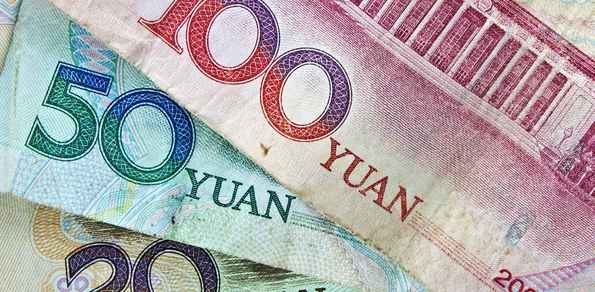
A New Chinese Currency Initiative
In 2009, the People’s Bank of China used Shanghai to kick off a trial program to permit Chinese companies to settle cross-border trade in yuan—which has now expanded to include the rest of the country. Once again a new trial program will be launched in Shanghai.
The yuan-fund program is “under preparation”, Fang Xinghai, director-general of the Shanghai Municipal Office of Financial Services, said in an interview with The Wall Street Journal on Monday. Approved managers of private-equity and hedge funds, both international and domestic, would be able to raise yuan capital from Chinese companies and individuals and invest it in foreign markets. Funds would be required, among other things, to register in Shanghai to participate in the program.
[quote]Shanghai is in a good position to start trials of financial reforms[/quote]
Shanghai is planning a pilot program to allow forex funds and others to raise yuan funds on the mainland for overseas investment. It would mark the latest move by Chinese authorities to loosen controls on cross-border capital flows.
China has been easing such restrictions as part of its broader ambition to turn the yuan into an international currency. But tight capital controls remain as part of a long-standing policy aimed at managing the yuan’s exchange rate and protecting the country’s creaking financial system from external shocks.
A key part of that transformation involves making its currency fully convertible and revamping the country’s financial sector. The central bank has allowed greater two-way swings in the yuan’s exchange rate since early this year, partly to let the market play a bigger role in deciding the yuan’s value.



Since 2010, when the PBOC allowed the yuan to float somewhat, it has intervened frequently to guide the currency higher. But the future direction of the yuan has become increasingly murky as China’s trade surplus has eroded in recent months. The yuan dipped 0.06% against the U.S. dollar in the first quarter, the first quarterly drop in two years. That compares with 4.7% appreciation in 2011.
The recent fluctuations in the yuan’s value, many say, represent a sign of maturing for the currency and could lead to a greater willingness among Chinese households to diversify their earnings into foreign currencies. When the yuan falls in value, Chinese nationals may be more inclined to hold dollar assets.
One of the key reasons for continued foreign interest in Chinese markets is the rise in value in the yuan, which boosts returns on yuan-denominated assets. For future growth the markets need to see signs that the government will allow the currency to trade freely.
Capital-market liberalization is a key precondition for the yuan to become a currency that can be used for international trade and investment. Shanghai aims to become a global center for yuan clearing, pricing and trading in the next three years.
CFDs are complex instruments and carry a high risk of rapid losses due to margin trading. Consider whether you understand how CFDs work and whether you can afford the risk of losing your money. This article is for educational purposes and is not investment advice.
Author: Andrew Trent
Andrew holds a degree in Data and Statistical Analysis and brings a tech nerd's curiosity to his writing. Off the clock, he's modeling data scenarios for fun, scuba diving, or taking underwater photos. He lives with his two Labradors, Homer and Duff, and his cat, Fibonacci.
Reviewed by: Chris Blakely
Content Editor with over two decades in financial journalism and a degree in Computer Engineering from the Polytechnic of the South Bank. Chris checks every article for factual accuracy and verifies claims before publication.
Last updated: April 2, 2012
Related Reading



Trader Sentiment
Share your outlook and see the results.
Bullish or bearish on EURUSD today?
Bullish or bearish on Bitcoin today?
Trending topics
FOREX HEATMAP
