

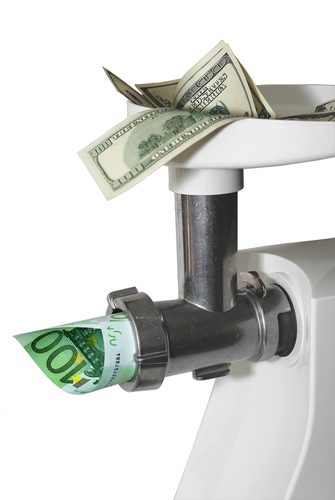
How to Use a Currency Converter
Using a currency converter is remarkably easy and is no different from typing on a calculator. In fact, it’s easier because the converter will be the one doing the entire job for you.
Step 1: Choose any converter type
Step 2: Choose the base currency or the currency you have on hand
Step 3: Choose the currency that the base will be turned into
Step 4: Enter the amount of base money you have.
Step 5: Check the calculation made by the program.
As a hypothetical example, check out the USD and JPY currency pair. For every 1 USD, individuals can get about 7.5 Yen. If an individual has 10 USD in all, the calculator will show that a person has 75 in Yen. It’s that simple.
The main complication in using a currency converter is that the value is very changeable. In the example above, the value of the Yen will not always be 7.5 for every dollar. It might go up or down in just a matter of hours or minutes. Hence, it is important that traders get a highly accurate converter for the job. Otherwise, they might find themselves losing precious money on their trade.
Where to find a currency converter?
Getting a converter is easy if a trader is not picky about quality. Many converters today are completely free and can be found with a simple search online. Brokers may also provide an updated converter for those who need them as well as additional charts.



How to choose a currency converter?
Choosing a converter is not really hard thanks to the number of converters available. Basically though, there are only TWO vital factors that a good converter must have – timeliness and accuracy. Again, the Foreign Exchange market is highly volatile so traders must be aware of every change in the value of their chosen currencies.
Ideally, the converter should be updated on a per-second basis. Traders should also make sure that there are just a few seconds gap between checking a currency’s value and closing a trade. By doing this, they can be sure to get the exact results they are hoping for.
What to Remember
Keep in mind that a currency calculator is a “preset” type of tool. This means that the tool tells you fresh information that paves the way for a proper reaction. However, it is unable to make predictions on exactly how the market will move unlike charts. For this reason, traders are advised to use other methods of determining trade decisions. A good example would be analyzing candlestick charts, bar charts and line graphs.
In some instances, traders may also use collective information from converters to find out which time of the day is a currency at their highest point. When properly plotted, it can provide ample information on how a person should schedule their buying and selling’s in Forex.
Of course, don’t forget qualitative data that may impact the value of the currencies. Some of these data include the political and economic situation of the nation where the currency hails from.
CFDs are complex instruments and carry a high risk of rapid losses due to margin trading. Consider whether you understand how CFDs work and whether you can afford the risk of losing your money. This article is for educational purposes and is not investment advice.
Author: Andrew Trent
Andrew holds a degree in Data and Statistical Analysis and brings a tech nerd's curiosity to his writing. Off the clock, he's modeling data scenarios for fun, scuba diving, or taking underwater photos. He lives with his two Labradors, Homer and Duff, and his cat, Fibonacci.
Reviewed by: Chris Blakely
Content Editor with over two decades in financial journalism and a degree in Computer Engineering from the Polytechnic of the South Bank. Chris checks every article for factual accuracy and verifies claims before publication.
Last updated: September 13, 2012
Related Reading

Trader Sentiment
Share your outlook and see the results.
Bullish or bearish on EURUSD today?
Bullish or bearish on Bitcoin today?
Trending topics
FOREX HEATMAP
