

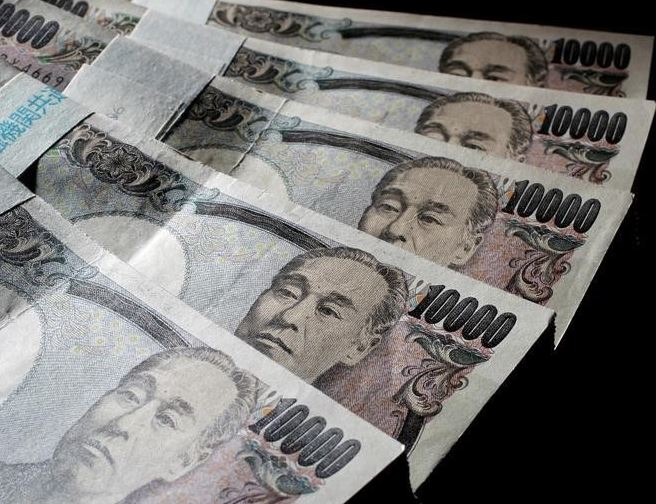
Yen fights back, Aussie falls as RBA holds rates
The yen put up a fight on Tuesday, but it was still on shaky ground as markets waited for the big guns of real FX intervention to show up. Meanwhile, the Aussie dollar took a dive after the central bank of Australia decided to sit on its hands and keep interest rates steady.
Markets expect BoJ’s intervention
In all the currency arenas, investors kept an eye out for any signs of Japan stepping in to stop the bleeding of the yen.

The yen was trading at 144.64 per dollar in Asia, but it was not far from last week’s eight-month low of 145.07 per dollar, which triggered a warning from Treasury Secretary Shunichi Suzuki to stop kicking the yen when it’s down.
Japan’s top money man Masato Kanda said earlier on Tuesday that he and his team are in touch almost every day with US Treasury Secretary Janet Yellen and other foreign bigwigs on currency matters and the wider financial scene.
“These are hints that a coordinated intervention might be in the works as the yen keeps hovering above 144 per dollar,” said Charu Chanana, market whiz at Saxo Markets.
“A coordinated intervention usually packs more punch for the yen than a solo act.”
Japan snapped up the yen in September, which was its first market move to prop up its currency since 1998. The Bank of Japan’s vow to keep its super-soft policy for as long as it takes pushed the yen down to 145 per dollar back then. It stepped in again in October after the yen hit a 32-year low of 151.94.
RBA keeps rates unchanged, markets flat
Markets were flat as a pancake as inflation cooled off a bit more than expected in May, while economists were split, with 16 out of 31 Reuters pollsters betting on a hike and the rest saying the bank would hold fire.
After a surprise pause in April and subsequent hikes in May and June, economists have been at odds in recent months over what the RBA will do next.
Dollar rises, US data and Fed minutes eyed
The dollar flexed its muscles against a basket of currencies, rising 0.097% to 103.05 after data on Monday showed U.S. factories kept struggling in June, hitting levels last seen as the country bounced back from the first wave of the COVID-19 outbreak.
“We think the US economy is heading for a slump starting in the third quarter,” said Christina Clifton, senior FX guru at Commonwealth Bank of Australia, adding that it was likely to be a snooze-fest for the FX market as there were no major data drops or central bank speeches on the agenda.

US markets are shut on July 4 for the Independence Day holiday.
Investors will be glued to the nonfarm payrolls data and the jobs report this week to get more clues about how the US labor market is doing overall. The minutes of the US Federal Reserve’s June meeting are also due on Wednesday. Markets are betting big on a 25 basis point rate hike at the next Federal Reserve meeting at the end of the month with a probability of about 87%, according to the CME FedWatch tool.
CFDs are complex instruments and carry a high risk of rapid losses due to margin trading. Consider whether you understand how CFDs work and whether you can afford the risk of losing your money. This article is for educational purposes and is not investment advice.
Author: Andrew Trent
Andrew holds a degree in Data and Statistical Analysis and brings a tech nerd's curiosity to his writing. Off the clock, he's modeling data scenarios for fun, scuba diving, or taking underwater photos. He lives with his two Labradors, Homer and Duff, and his cat, Fibonacci.
Reviewed by: Chris Blakely
Content Editor with over two decades in financial journalism and a degree in Computer Engineering from the Polytechnic of the South Bank. Chris checks every article for factual accuracy and verifies claims before publication.
Last updated: July 4, 2023
Related Reading



Trader Sentiment
Share your outlook and see the results.
Bullish or bearish on EURUSD today?
Bullish or bearish on Bitcoin today?
Trending topics
FOREX HEATMAP
