

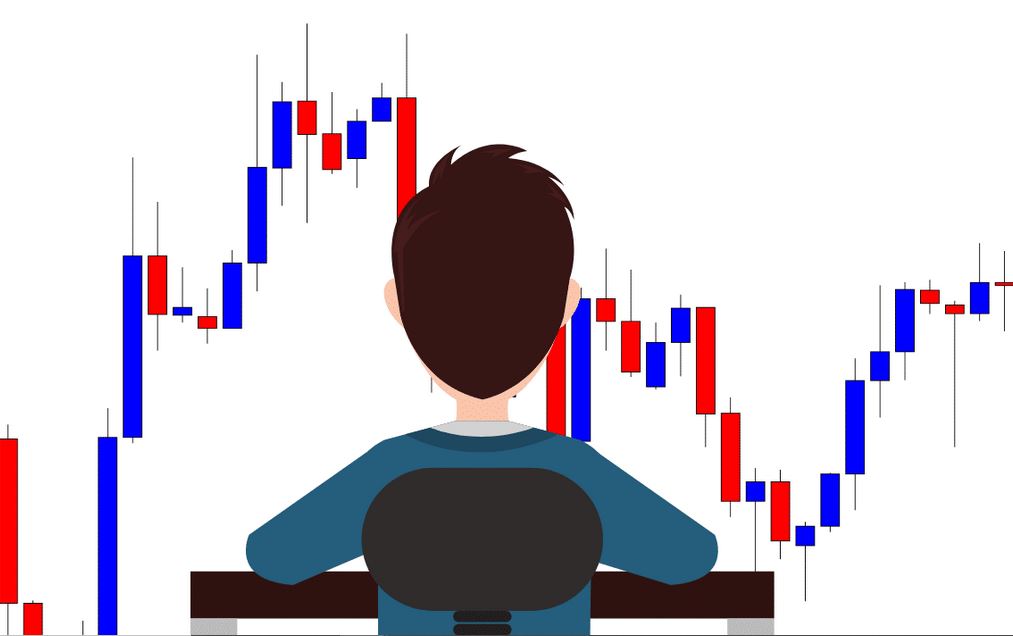
How to Reduce Risk in Trading?
Reduced losses are possible with risk management. Accounts can also be protected from loss of funds with risk management. Losses may occur when traders trade. Managing risk is essential for traders who want to make money on the market.
A successful active trading strategy requires this essential prerequisite but is often overlooked. It is possible for a trader who has earned substantial profits to lose it all with just one or two bad trades without an adequate risk management strategy. Then what’s the best way to control market risks?
Fortunately, there are some crucial rules to follow. These rules will lower your overall risk exposure, ensuring that a blunder will not undo your excellent work.

The 1% rule
Consider that you have a trading budget of AU$10,000. What is the ideal amount to place on any given trade? According to experts, it should be 1%. Using this rule, your maximum exposure per trade would be AU$100.
Those aren’t enough to ruin the bank if markets deteriorate. There is a possibility that you will have a much bigger budget, perhaps $100,000. The 1% cap may be increased slightly in that case. If your trading budget is 2%, you will only trade up to $2,000 per trade.
Set correct stop losses and take profits
One of the most critical decisions in the trading process is setting the correct stop loss and taking a profit. It is, however, too common to set the stop loss/take profit arbitrarily. Losses could be capped at a certain amount for each trade by setting a fixed size.
The stop-loss could be determined by simply the amount of money in the account, similar to a gamble with all or nothing.
The trader should consider the market’s state and how long they are prepared to wait for a profit when determining where to exit the trade. Using the correct stop/take profit settings will lower risk and produce better and more consistent trade results.
Avoid trading around big economic announcements
Almost every day, we hear about some economic announcement. But the most significant announcements should be viewed with caution. Changes in interest rate policy by central banks that are unexpected can cause the markets to spiral out of control.
Data on consumer spending, inflation figures, and job reports can also highly influence many markets.
Stay up to date with the economic calendar. The day-to-day planning of trades can be done reasonably quickly around these events. Holding positions for a more extended time can be mitigated by hedging, or traders can close the shares if needed.
Set realistic goals
No matter what type of trading activity you participate in, your financial return can vary significantly from month to month. However, having a firm goal in mind helps you remain focused.
In many cases, traders want to earn as much money as possible as fast. Nevertheless, this will not necessarily keep them on the course or provide realistic expectations of how far they have come.
Setting a concrete goal, such as a return on the initial investment, is an excellent way to measure progress. When you set your goals too high, you take too many risks. Traders are more likely to take bigger and bigger risks when they underperform to meet their objectives.

Bottom line
When trading on gut instinct, no one wants to lose their shirts off their back. To calibrate perfectly, limit your trading amounts to no more than 1% or 2% per trade when you enter the trading wicket. Risk isn’t eliminated, but 1% or 2% of the original balance of your trading account can at most be lost by every fractional component of your portfolio.
CFDs are complex instruments and carry a high risk of rapid losses due to margin trading. Consider whether you understand how CFDs work and whether you can afford the risk of losing your money. This article is for educational purposes and is not investment advice.
Author: Andrew Trent
Andrew holds a degree in Data and Statistical Analysis and brings a tech nerd's curiosity to his writing. Off the clock, he's modeling data scenarios for fun, scuba diving, or taking underwater photos. He lives with his two Labradors, Homer and Duff, and his cat, Fibonacci.
Reviewed by: Chris Blakely
Content Editor with over two decades in financial journalism and a degree in Computer Engineering from the Polytechnic of the South Bank. Chris checks every article for factual accuracy and verifies claims before publication.
Last updated: June 17, 2022
Related Reading

Trader Sentiment
Share your outlook and see the results.
Bullish or bearish on EURUSD today?
Bullish or bearish on Bitcoin today?
Trending topics
FOREX HEATMAP
