

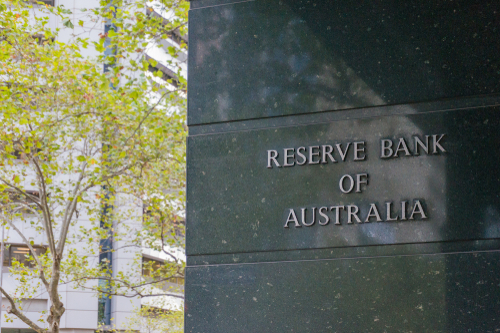
The RBA is predicted to keep the cash rate at its record low of 1.5%, for a record period of inactivity, however, attention will quickly turn to the monetary policy statement.
At 4:30am U.K. time on Tuesday April 2nd, the Australian central bank, the RBA (reserve bank of Australia), will announce its latest decision regarding the country’s key interest rate, referred to as the cash rate. The widely held consensus, from the news agencies Reuters and Bloomberg, after they’ve polled their panel of economists, is for the rate to remain at its record low of 1.5%, where its remained for a record period of thirty one months of inactivity; since August 2016.

In its last monetary policy statement, the RBA delivered a dovish tone, as it voiced its concerns regarding: overall growth, inflation and the possibility of China’s growth slowing, as reasons for holding the rate steady. China imports vast amounts of aggregates from Australia, such as iron ore and coal, crucial exports which account for a significant percentage of the Australian economy.
The central bank went further in March, by adopting a more dovish tone; suggesting that a rate cut might be appropriate, if the Australian economy begins to suffer any impact, from slowing global and Chinese trade. As the latest China data appears to have improved and with Australian GDP growth at 2.3%, unemployment at 5.3% (the lowest level of eleven years) and inflation at 1.8%, the RBA should, in theory, feel empowered and as a consequence be in no rush to change policy dramatically.
Australia’s latest trade surplus figure also provided cause for optimism regarding the long term health of the Aussie economy; the surplus surged to AUD 4.55 billion in January 2019, from the upwardly revised figure of AUD 3.77 billion in the previous month, beating market forecasts of a surplus of AUD 3 billion. This was the second largest trade surplus on record; exports grew 5% month on month, to print a new all time high of AUD 39.94 billion, imports grew at 3%, to AUD 35.39 billion.
The latest interest rate decision is released during the Asian session, when forex trading volume and liquidity is lower, in comparison to that experienced during the London and New York sessions. Therefore, traders who specialise in trading currencies such as the Aussie and New Zealand dollars and their associated currency peers, should take care to ensure they’re in a position to capitalise from any opportunities that may arise, whilst being forearmed and forewarned, in order to cope with any sudden movements.
CFDs are complex instruments and carry a high risk of rapid losses due to margin trading. Consider whether you understand how CFDs work and whether you can afford the risk of losing your money. This article is for educational purposes and is not investment advice.
Author: Andrew Trent
Andrew holds a degree in Data and Statistical Analysis and brings a tech nerd's curiosity to his writing. Off the clock, he's modeling data scenarios for fun, scuba diving, or taking underwater photos. He lives with his two Labradors, Homer and Duff, and his cat, Fibonacci.
Reviewed by: Chris Blakely
Content Editor with over two decades in financial journalism and a degree in Computer Engineering from the Polytechnic of the South Bank. Chris checks every article for factual accuracy and verifies claims before publication.
Last updated: April 1, 2019
Related Reading



Trader Sentiment
Share your outlook and see the results.
Bullish or bearish on EURUSD today?
Bullish or bearish on Bitcoin today?
Trending topics
FOREX HEATMAP
